
Downspout and Gutter Drainage in Tulsa, OK
Roof water is the easiest drainage problem to fix and the most common one to ignore. Buried downspout lines, pop-up emitters and curb outlets move it away from the house; here is how they work in Tulsa clay.
Get a Free Quote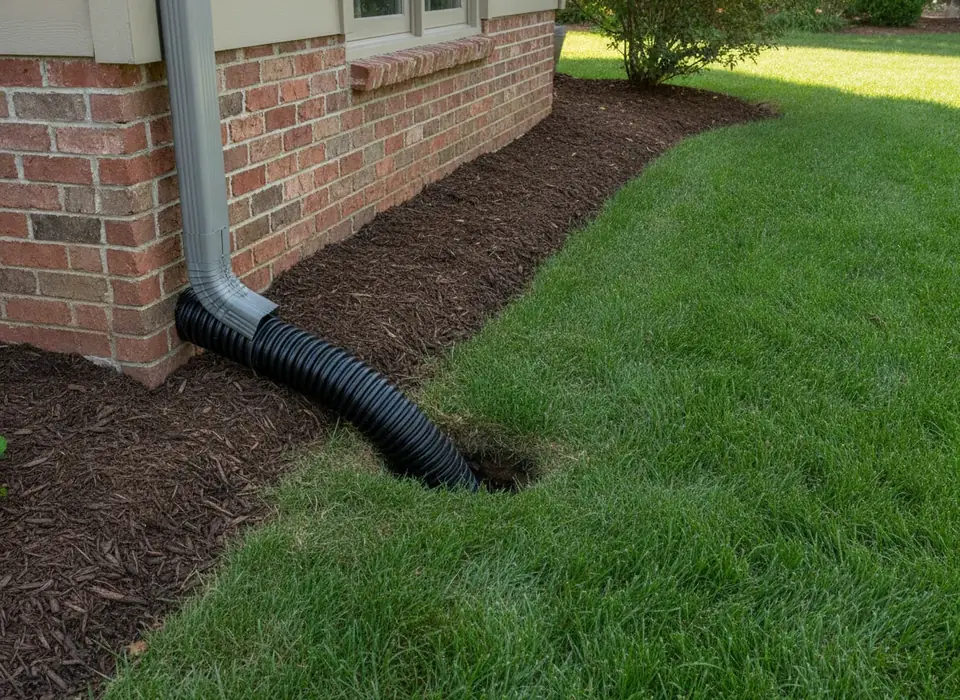
Why roof water matters so much
An inch of rain on 1,000 square feet of roof is roughly 620 gallons of water. Gutters collect it, then most downspouts drop it in a splash block a foot from the slab. On Tulsa clay that water has nowhere to go, so it soaks the soil right at the foundation or runs into a low spot nearby.
Tulsa's own guidebook takes roof water seriously. It says all new houses must have roof drainage directed "to the street or other approved conveyance," and site plans have to show downspout flow direction. Older homes weren't always built that way, and many buried lines from decades ago have collapsed or filled with silt.
Tulsa French Drain Pros is a free matching service, not a gutter or drainage company. Independent local companies reply to your request with quotes.
Underground lines, pop-ups and dry wells
Most Tulsa jobs use some mix of these. The right one depends on slope and where water can legally go.
Your three main options
| Option | How it works | Watch for |
|---|---|---|
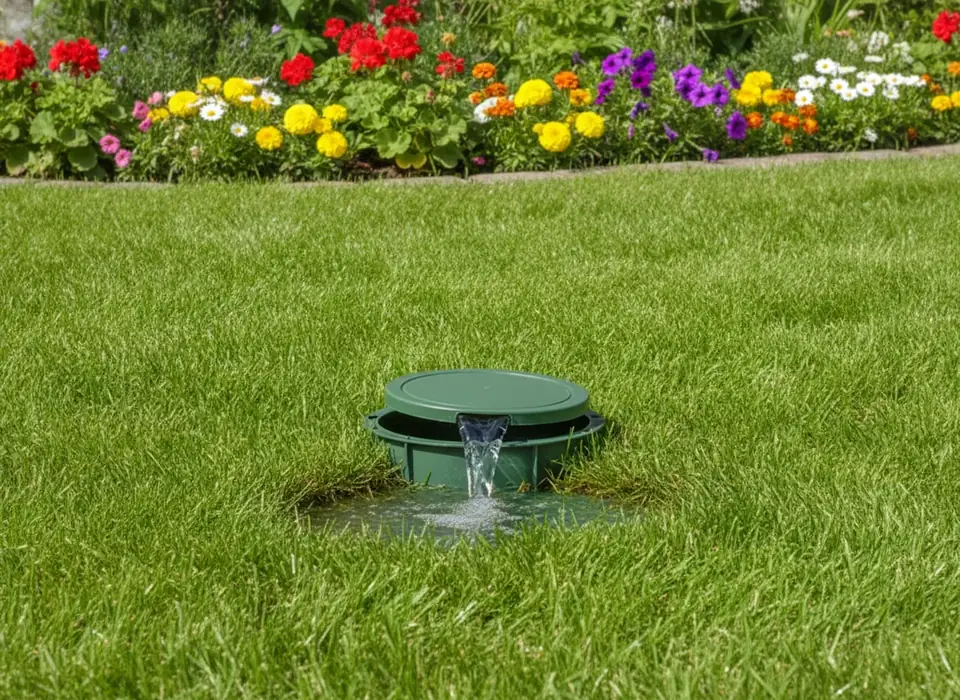
| Underground downspout line to a pop-up emitter | Downspout connects to a buried solid pipe that runs downhill to a spring-loaded cap in the lawn. Water pushes the cap up and spreads across the grass. | The emitter needs to be lower than the downspout and far enough from the house and neighbors. Caps can clog with grit and leaves. |
| Underground line to the curb or a swale | The pipe runs to the street, a ditch or a platted swale. | Running a pipe through the curb is right-of-way work and needs a separate permit inside Tulsa city limits. |
| Dry well | A buried chamber or gravel pit stores roof water and lets it soak into the ground over time. | Clay soils drain slowly, so a dry well can stay full after a wet week. Ask about a percolation check first. |
The honest word on dry wells in Tulsa clay
Dry wells are popular in sandy parts of the country. Much of Tulsa County is different: the slowest layers of common soils like Dennis, Okemah, Parsons and Osage have very low infiltration rates in USDA data, on the order of a few hundredths to a tenth or so of an inch per hour. A dry well in that soil can work as a buffer that empties slowly, but it can also sit full when you need it most.
Soil varies a lot from lot to lot, and some river-terrace ground near the Arkansas is sandier. Ask a contractor to check how fast your soil actually drains before you pay for a dry well, and ask what happens when it overflows. The article on dry wells vs pop-up emitters in clay goes deeper.
How a downspout drainage job usually goes
Check the gutters
Clogged or undersized gutters overflow before water ever reaches a downspout. Many contractors start here.
Plan the route
Each downspout gets a path downhill to an outlet, avoiding sprinkler lines, trees and the neighbor's yard.
Locate and dig
OKIE811 marks public lines; private lines need separate attention. Trenches are usually shallower than a full French drain.
Pipe, test and restore
Solid pipe is the usual choice for roof water so it doesn't leak back near the slab. A hose test proves it flows, then sod goes back.
What it costs
Downspout lines are priced per foot like a shallow drain plus the emitter or outlet, so get each one itemized: number of downspouts, feet of pipe, type of emitter, any curb work and lawn repair. For context:
| Item | Typical range | Source |
|---|---|---|
| French drain in a yard (per foot) | $20–$30 | Bob Vila, Jun 2024 |
| French drain, Tulsa | $23–$36 per linear foot | HomeBlue, May 2024 |
| Dry well | $1,500–$5,000 installed | Fixr, Jan 2025 |
| Sod after trenching | $1–$2 per sq ft | Bob Vila, Jun 2024 |
Published estimates, not quotes (HomeBlue May 2024; Fixr Jan 2025; Bob Vila Jun 2024). Tulsa companies' quotes vary.
Fixing downspouts first is one of the cheapest ways to find out whether you need anything bigger. See the cost guide for more.
Rules, utilities and neighbors
Tulsa's Residential Site Plan Guidebook says properties must convey drainage "without causing damage to adjoining properties," and water can't be blocked from flowing onto your lot from uphill. A good plan carries water to the street or another approved outlet, never onto a neighbor and never into a sanitary sewer.
Inside Tulsa city limits, the city's Watershed Development Permit rules cover excavating, grading and regrading, and work in the street right-of-way (like running a pipe through the curb) needs a separate right-of-way permit. Ask your contractor whether your project needs a permit, or call City of Tulsa Development Services (311). Suburbs have their own rules.
Oklahoma law requires anyone digging for hire to contact OKIE811 at least 48 hours ahead (excluding weekends and holidays). It's free. Sprinkler lines and other private lines aren't marked, so your contractor should plan for them.
Check your HOA covenants and plat for drainage easements before regrading or trenching.
Never connect downspouts to a sanitary sewer cleanout. Roof water belongs in the stormwater system, the street or the lawn, not the sewer.
Questions to ask before you hire
- How many downspouts will you connect, and where does each one end?
- Solid or perforated pipe, what diameter, and how deep?
- What kind of emitter, and how do I keep it clear?
- Is there a cleanout or a debris filter at the downspout?
- Does any part of this cross the curb or right-of-way?
- Is gutter cleaning or repair included or separate?
Oklahoma doesn't issue a state license for general, landscape or drainage contractors. Plumbing, electrical and mechanical work does require a Construction Industries Board license. Ask any contractor for proof of liability insurance, and use a licensed plumber for anything tied into your home's plumbing.
If water still collects after the roof water is handled, a French drain or broader yard drainage fix may be next.
Downspout Drainage FAQ
How do pop-up drain emitters work?
A buried pipe carries roof water from the downspout to a spring-loaded or hinged cap set in the lawn. When water fills the pipe, pressure lifts the cap and water spills out across the grass. The emitter must sit lower than the downspout, and the cap can clog with roof grit, so a cleanout or filter at the top helps.
Do dry wells work in Oklahoma clay?
Sometimes, but often slowly. Common Tulsa County clay soils have very low infiltration rates in USDA data, so a dry well can stay full after several wet days. Some lots, especially sandier river terraces, drain better. Ask the contractor to check how fast your soil drains before you commit, and ask where overflow will go.
Can I run my downspouts to the street in Tulsa?
Often that's the preferred outlet: Tulsa's guidebook asks new homes to send roof drainage to the street or another approved conveyance. Running a pipe through the curb, parkway or sidewalk is right-of-way work that needs a separate permit inside city limits, so ask your contractor or call 311 first.
Why do buried downspout lines clog?
Shingle grit, leaves and silt wash into the pipe and settle where the slope flattens. Roots and crushed sections cause blockages too, especially in older lines. Gutter guards, a filter or cleanout at each downspout, steady slope and periodic flushing help. A camera inspection can find the problem without digging up the whole run.
Get downspout drainage quotes
Tell us how many downspouts you have, where water collects and whether you'd prefer pop-ups or a curb outlet. Independent local companies reply with no-obligation quotes.
Standing water after every storm? Get free quotes.
Describe the problem once and independent Tulsa-area drainage companies can reply with no-obligation quotes.