
Yard Grading, Regrading and Swales in Tulsa, OK
Sometimes the best drain is no pipe at all. Regrading the soil and shaping a shallow swale lets water run off the way gravity intends. Here is when that works, what it costs and what Tulsa rules apply.
Get a Free Quote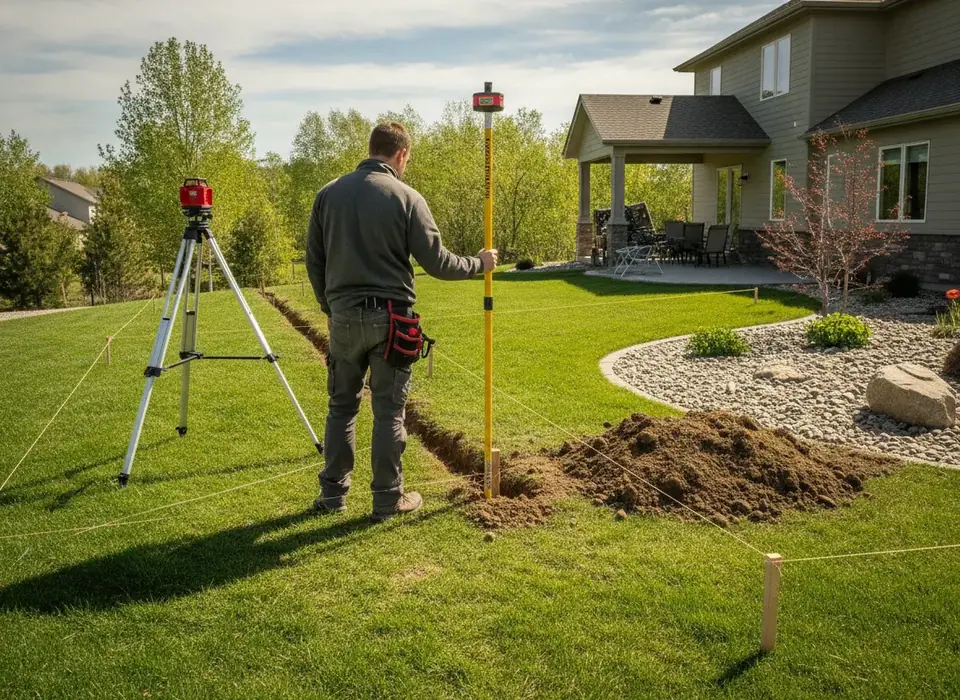
What grading and swales do
Grading means shaping the ground so water runs where you want it. Regrading fixes a lot whose slope has gone wrong, usually because soil settled next to the house, beds were built up, or a builder's original grade wasn't great.
A swale is a shallow, wide, grassed channel that guides surface water across a yard, often along a property line, toward the street or another outlet. You can mow over a good one and barely notice it until it rains.
Grading fits when the problem is surface water: puddles near the slab, water sheeting toward the patio, or a broad low area. It's often the first fix before anyone trenches for a French drain.
Tulsa French Drain Pros is a free matching service, not a grading contractor. Independent local companies reply to your request with quotes.
Why Tulsa lots lose their grade
Older Tulsa neighborhoods have had decades to settle: half the city's homes were built in 1973 or earlier. Soil compacts beside foundations, tree roots lift and shift ground, and flower beds slowly rise above the original grade. On shrink-swell clay, which covers about 47% of Tulsa County, the ground also moves with wet and dry seasons.
Newer suburbs have a different pattern. Builder-graded lots often share swales between houses, and those swales get filled by landscaping, fences or sheds. A swale that used to carry water to the street becomes a dam.
How contractors regrade a yard
Measure
The contractor shoots grades with a laser level or transit to see how far the ground actually falls and where.
Plan the flow
The plan shows where water will go: away from the house and toward the street, a swale or another approved outlet, without sending it onto a neighbor.
Move soil
Soil is cut from high spots and added to low ones. Fill is compacted in layers so it doesn't settle right back.
Finish and protect
The surface gets topsoil and sod or seed. Bare soil on Tulsa clay can erode fast in a spring storm, so restoration timing matters.
How much slope is enough?
A common building-code benchmark from the International Residential Code is ground that falls at least 6 inches within the first 10 feet away from a foundation, where the lot allows. Ask your contractor what standard they'll grade to and how they'll measure it.
Keep finished soil below brick weep holes and siding. Piling dirt against the house to create slope can trap moisture where it doesn't belong.
Grading or a French drain?
| Situation | Usually points to |
|---|---|
| Puddles beside the slab, soil sloping toward the house | Regrading near the house |
| Water sheeting across the yard from uphill | A swale, sometimes with a curtain drain |
| A low strip that stays soggy even with decent slope | A French drain |
| No room to regrade between houses | A drain or buried downspout lines |
What grading costs
| Item | Typical range | Source |
|---|---|---|
| Regrading | $1,500–$2,600 per 1,000 sq ft (avg ≈ $1,800) | Fixr, Jan 2025 |
| French drain, Tulsa | $23–$36 per linear foot | HomeBlue, May 2024 |
| Sod after work | $1–$2 per sq ft | Bob Vila, Jun 2024 |
Published estimates, not quotes (HomeBlue May 2024; Fixr Jan 2025; Bob Vila Jun 2024). Tulsa companies' quotes vary.
Access for equipment, how much fill must be hauled in, fence or bed removal, and restoration all move the price. The cost guide covers other drainage figures.
Permits, easements and neighbors
Grading is the work Tulsa's permit language names most directly. The city's Watershed Development Permit rules cover "excavating, grading, regrading" and other earth changes within city limits. Running a pipe through the curb needs a separate right-of-way permit. Ask your contractor whether your project needs a permit, or call City of Tulsa Development Services (311). Suburbs have their own rules.
Check your HOA covenants and plat for drainage easements before regrading or trenching.
Platted swales and drainage easements often carry water for several lots. Filling or rerouting one can create problems for neighbors and may violate the plat.
Tulsa's Residential Site Plan Guidebook says properties must convey drainage "without causing damage to adjoining properties," and water can't be blocked from flowing onto your lot from uphill. A good plan carries water to the street or another approved outlet, never onto a neighbor and never into a sanitary sewer.
Oklahoma law requires anyone digging for hire to contact OKIE811 at least 48 hours ahead (excluding weekends and holidays). It's free. Sprinkler lines and other private lines aren't marked, so your contractor should plan for them.
Questions to ask
- How much fall will the finished grade have, and how will you measure it?
- Where does the water end up?
- How much fill or topsoil are you bringing in, and how will it be compacted?
- Is sod or seed included, and what if it washes out before it takes?
- Does this need a permit, and is my lot in a drainage easement?
- Can I see proof of liability insurance?
Oklahoma doesn't issue a state license for general, landscape or drainage contractors. Plumbing, electrical and mechanical work does require a Construction Industries Board license. Ask any contractor for proof of liability insurance, and use a licensed plumber for anything tied into your home's plumbing.
Grading and Swale FAQ
Do I need a permit to regrade my yard in Tulsa?
Possibly. The City of Tulsa's Watershed Development Permit rules name grading and regrading among the activities that require a permit inside city limits, and the city hasn't published a clear small-job exemption. Ask your contractor, or call Development Services at 311 before work starts. Suburbs set their own rules.
What is a drainage swale?
A swale is a shallow, broad channel, usually grassed, that guides surface water across a yard toward the street or another outlet. Many Tulsa-area subdivisions have platted swales along property lines. Because they often serve several lots, check your plat and HOA covenants before changing one.
How much does yard regrading cost?
Fixr's January 2025 figure is $1,500–$2,600 per 1,000 square feet, with an average around $1,800. Access, hauled-in fill, removing fences or beds, and new sod at $1–$2 per square foot (Bob Vila, June 2024) all change the total. These are published estimates, not quotes.
Is regrading better than a French drain?
For surface water, often yes. If water pools because the ground slopes toward the house or into a broad low area, regrading fixes the cause instead of collecting the symptom. A French drain is better for long soggy strips, seepage from uphill, or tight lots with no room to reshape the soil. Some yards need both.
Get grading and swale quotes
Tell us where water pools, how big the area is and whether there's room for equipment. Independent local companies reply with no-obligation quotes.
Standing water after every storm? Get free quotes.
Describe the problem once and independent Tulsa-area drainage companies can reply with no-obligation quotes.