
Foundation Drainage and Curtain Drains in Tulsa, OK
Water that stands against a slab for days is worth dealing with. Curtain drains, perimeter drains and better grading move it away from the house. Here is what each does, what it costs and what drainage can and can't do for a foundation.
Get a Free Quote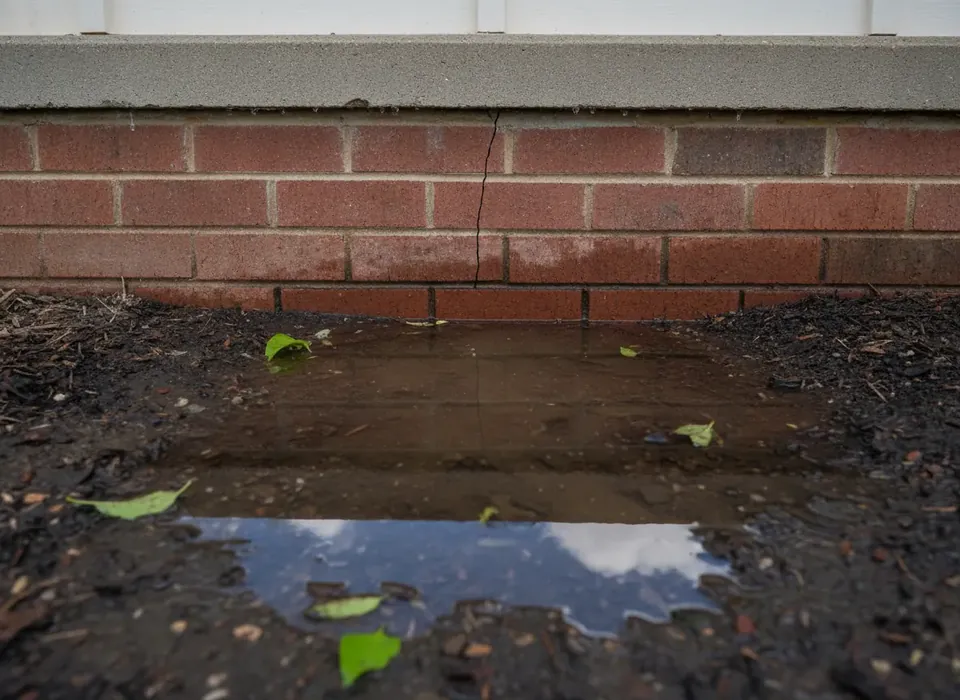
Slab homes on shrink-swell clay
Almost every newer house in this part of the country sits on a concrete slab: about 98% of new homes in the region that includes Oklahoma were slab-on-grade in 2024. Under many of those slabs is clay that swells when it gets wet and shrinks in a dry summer. About 47% of Tulsa County is mapped as high or very high shrink-swell soil.
When downspouts or a backward-sloping yard keep one side of the house soaked while the other side dries out, the soil moves unevenly. Good drainage can help reduce moisture swings in Tulsa's clay soils. It is not a structural repair, and nobody can promise it will stop a foundation from moving.
Tulsa French Drain Pros is a free matching service. Independent local drainage companies reply to your request with quotes.
Curtain, perimeter and footing drains
| Type | Where it goes | What it's for |
|---|---|---|
| Curtain drain | A gravel trench with perforated pipe across the uphill side of the house, set back from the foundation | Intercepting water that seeps downhill toward the house before it reaches the slab |
| Perimeter (around-the-house) drain | Along one or more sides of the house, near the foundation | Collecting water that pools at the slab edge where grading can't fix it alone |
| Footing drain | At footing depth, usually installed during construction or major excavation | Draining water at the base of a foundation wall; uncommon as a retrofit on slab homes |
On a typical Tulsa slab ranch, the conversation usually starts with downspouts and grading, then moves to a curtain or shallow perimeter drain if water still lingers. Deep footing drains are more common with basements and retaining walls.
How contractors approach foundation drainage
Map the water
The contractor checks downspouts, grade within the first several feet of the house, uphill runoff and where water stands.
Fix the easy sources
Downspout lines and minor regrading often come first because they're cheaper and change the picture.
Set the trench line
Curtain drains run uphill of the problem; perimeter drains follow the house. Ask how close to the slab they'll dig and how deep.
Outlet and test
Every drain needs a downhill outlet. A hose or rain test confirms it flows before sod goes back.
What it costs
| Item | Typical range | Source |
|---|---|---|
| Curtain drain | $10–$25 per foot | Fixr, Jan 2025 |
| French drain around the house | $50–$80 per foot | Bob Vila, Jun 2024 |
| Footing drain | $80–$100 per foot | Fixr, Jan 2025 |
| French drain, Tulsa | $23–$36 per linear foot | HomeBlue, May 2024 |
| Regrading | $1,500–$2,600 per 1,000 sq ft (avg ≈ $1,800) | Fixr, Jan 2025 |
Published estimates, not quotes (HomeBlue May 2024; Fixr Jan 2025; Bob Vila Jun 2024). Tulsa companies' quotes vary.
Work near the house costs more because of shrubs, beds, sidewalks, utility lines and the care needed close to the slab. Compare more figures in the cost guide.
Know the limits
Drainage work is not foundation repair. If you see wide or growing cracks in brick or slab, doors that suddenly stick, or floors that slope, talk to a structural engineer or a foundation repair company. That is a different trade, and a drainage contractor shouldn't promise structural results.
A drain also won't help with creek or river flooding. If your home is near a creek, request a Floodplain Determination from the City of Tulsa.
Tulsa's Residential Site Plan Guidebook says properties must convey drainage "without causing damage to adjoining properties," and water can't be blocked from flowing onto your lot from uphill. A good plan carries water to the street or another approved outlet, never onto a neighbor and never into a sanitary sewer.
Inside Tulsa city limits, the city's Watershed Development Permit rules cover excavating, grading and regrading, and work in the street right-of-way (like running a pipe through the curb) needs a separate right-of-way permit. Ask your contractor whether your project needs a permit, or call City of Tulsa Development Services (311). Suburbs have their own rules.
Oklahoma law requires anyone digging for hire to contact OKIE811 at least 48 hours ahead (excluding weekends and holidays). It's free. Sprinkler lines and other private lines aren't marked, so your contractor should plan for them.
Check your HOA covenants and plat for drainage easements before regrading or trenching.
Questions to ask
- Is this a curtain drain, a perimeter drain or both, and why?
- How far from the slab will you dig, and how deep?
- Where does the water exit, and what's the fall to that point?
- Should downspouts or grading be fixed first?
- How will you protect beds, sidewalks and utility lines near the house?
- Are you making any claims about my foundation? Put them in writing.
Oklahoma doesn't issue a state license for general, landscape or drainage contractors. Plumbing, electrical and mechanical work does require a Construction Industries Board license. Ask any contractor for proof of liability insurance, and use a licensed plumber for anything tied into your home's plumbing.
Related: grading and swales, downspout drainage and French drain installation.
Signed at the kitchen table?
If you sign at home, the FTC Cooling-Off Rule generally gives you three business days to cancel, and Oklahoma law gives a similar right for financed home-solicitation sales. A fair quote will still be good after you sleep on it.
Foundation Drainage FAQ
Can poor drainage cause foundation problems on a slab house?
Water is one factor. Tulsa-area clay swells when wet and shrinks when dry, and water dumped at one side of a slab can make that movement uneven. Good drainage can help reduce moisture swings in the soil. It isn't a structural fix, so for cracks or sloping floors talk to a structural engineer or foundation repair company.
What's the difference between a curtain drain and a French drain?
A curtain drain is a type of French drain. Both use a gravel trench and perforated pipe. A curtain drain is placed across the uphill side of a house or yard to intercept water before it gets to the problem area, while other French drains collect water where it pools. Both need a downhill outlet.
How close to the foundation should a drain be?
It varies with the design. Curtain drains are usually set back uphill of the house, while perimeter drains run nearer the slab edge. Digging close to a foundation takes care, so ask each contractor exactly how far from the slab they'll trench, how deep, and why they chose that line.
Do I need a foundation drain or just better grading?
Often grading and downspouts come first. If the soil near the house slopes toward the slab or roof water lands at the brick, fixing that may be enough. A curtain or perimeter drain makes sense when water still seeps toward the house after those fixes, or when the lot is too tight to regrade.
Get foundation drainage quotes
Tell us which side of the house stays wet, how long water sits and where your downspouts drain. Independent local drainage companies reply with no-obligation quotes.
Standing water after every storm? Get free quotes.
Describe the problem once and independent Tulsa-area drainage companies can reply with no-obligation quotes.